
Roundtable Talk
"Thinking about the use of open innovation by local governments/organizations"
We can create a place for co-creation together
Setting out-of-the-box themes can open up
opportunities to find new features and partners!
Local governments and organizations are increasingly turning to open innovation and co-creation with companies to solve local issues. At i2.JP, many local governments and organizations are trying to find the seeds of co-creation with new partners.
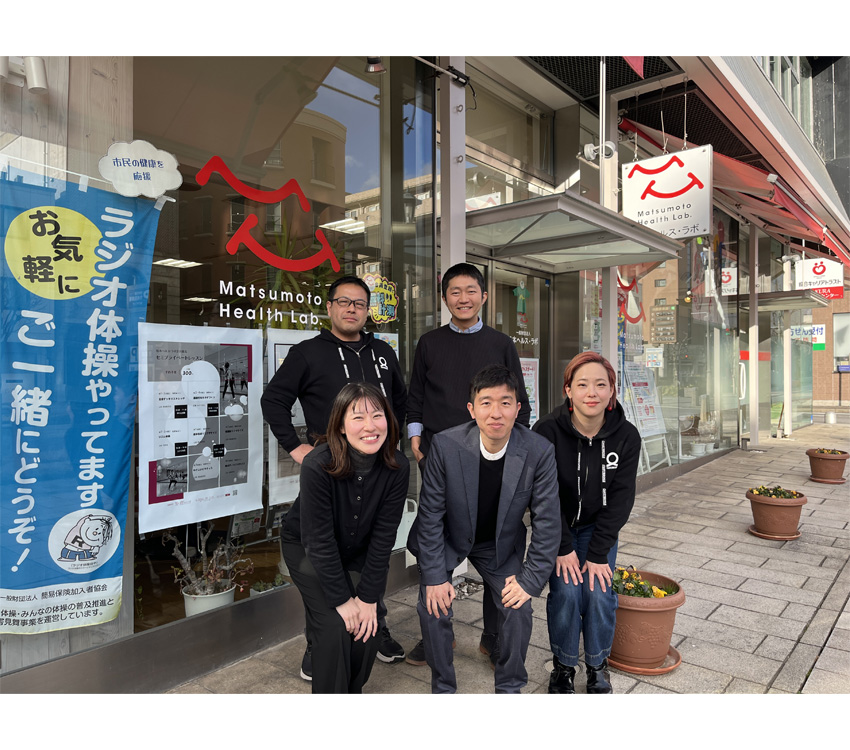
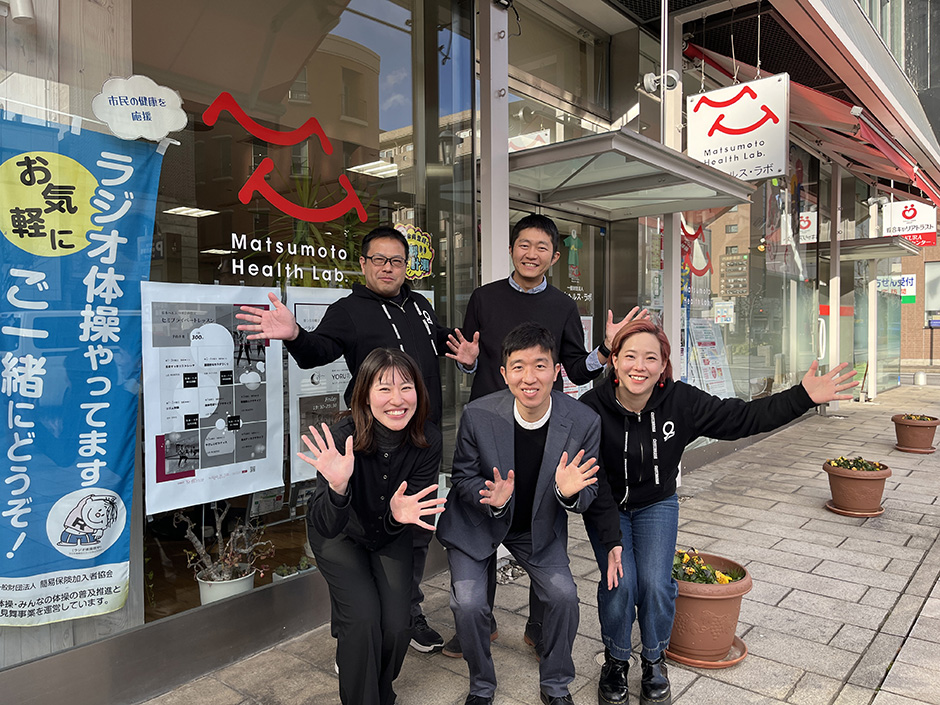
Matsumoto Health Lab is a living lab established by Matsumoto City in Nagano Prefecture to promote both the health of its citizens and the creation of a healthcare industry. It is exploring the possibility of collaboration with companies in various forms and has appeared as a reverse pitch presenter at the QUINTBRIDGE x i2.JP business matching event for two consecutive years in 2023 and 2024.
QUINTBRIDGE is an open innovation facility operated by NTT West, and as of January 2025, it has approximately 24,000 individual members, 1,750 corporate members, and holds more than 400 programs per year.
In this roundtable, members of Matsumoto Health Lab, QUINTBRIDGE, and i2.jp gathered to discuss collaboration with local governments and organizations, and the use of open innovation, while looking back on collaborations that took place after the matching event.
Matsumoto Health Lab (Matsumoto City, Department of Industry Promotion, Commerce and Industry Division, Health Industry Promotion)
Naoki Sugiyama
Rina Chiyoda
QUINTBRIDGE Communicator
Teppei Shimokawa
Tomoyo Akasaka
AstraZeneca i2.JP Director
Liu Lei
Looking back on the QUINTBRIDGE x i2.JP reverse pitch event
Encounters with surprisingly diverse people
Collaboration with companies to provide useful and specialized information to citizens
Sugiyama:Matsumoto Health Lab is a living lab established by Matsumoto City in 2015 as a base for connecting businesses and citizens who are trying to solve social issues, and for generating a synergistic effect by promoting citizen health and supporting the creation of a healthcare industry. Specifically, we focus on two areas: “test field”, or a tester survey and proof of concept commissioned by a company, and the organization of health events and the dissemination of information to citizens.
We have currently around 7,000 members, mainly from Matsumoto City, and they participate in our surveys and proof of concept. We provide participants with feedback on the results whenever possible to help them improve their health.
Chiyoda: At the QUINTBRIDGE x i2.JP reverse pitch event, we solicited ideas for distributing attractive content on the Matsumoto Health Lab official LINE account in 2023 and for increasing LINE members in 2024. We wanted to make contact with people from various companies, so we took part in the event. We were surprised to meet people from a wider range of industries than we had imagined. In particular, in 2024, we met many people we don't usually get the chance to meet, such as a kickboxing gym owner and a foot care trainer, and we received many inspiring and fresh ideas.
Akasaka: I was the group facilitator, and there were all sorts of unconventional ideas, such as “Let's change the name of Matsumoto Health Lab”. Are there any examples of collaborations with companies that resulted from the event?
Chiyoda:After the 2023 event, we made an appointment on the spot with a pharmaceutical company that joined our group, and we started working together immediately. They continue to support us by providing information through the app and holding health seminars.
What was most helpful was that the company already had a network of specialist doctors in the area where the seminar was to be held, so we were able to get the right specialist to speak at the seminar. I think what the local specialist said resonated with the participants, and it inspired people with concerns to take the first step and see a doctor.
In terms of information dissemination, the number of accesses to content related to skin problems increased. Matsumoto City is located at a high altitude, so the ultraviolet rays are strong, and the wind often blows, and it is said that many people have dry skin. We don't have the expertise, and targeted information dissemination was one of our challenges, so I think we were able to overcome one of the challenges thanks to the collaboration.
Liu:Were there any factors that made the collaboration smooth?
Chiyoda:The company we collaborated with provides a wide range of information for the general public on its website, and this was very helpful when we were considering how to collaborate. As we receive proposals from different companies, it is easier to imagine how a collaboration might work if a company has its own original content. We got to know many people from different companies through the event, so in the future we would like to explore new ways of co-creation, such as LINE campaigns.
Thinking about how the living lab can grow
Share examples of “how citizens' voices gave birth to XYZ”
Become a lab that is attractive to both citizens and companies
Sugiyama:As for our “test field” projects, we have conducted tester surveys on functional foods, app usability, and so on. When we first started, we had many elderly members, so we did a lot of surveys for the elderly, such as cognitive function surveys, but as our membership base has gradually expanded, we have also been doing more surveys for the working generation. The sample size varies from around 50 to 3000 people. We think that our extremely high completion rate is one of our strengths as a test field.
Liu:Are there other living labs run by municipalities?
Sugiyama:Most of them are run by prefectures, and I think there are very few labs that are run by a single municipality. Also, the operation of other labs is basically outsourced, and we are unique in that we have city staff directly involved.
Liu:That helps you build up know-how and gain the trust of both citizens and businesses.
Chiyoda: I think tester surveys are being completed at a high rate because the people in the prefecture are very diligent, and at the same time we are following up with them meticulously, for example, by making phone calls to those who are not filling out their diaries. We sometimes meet and speak with participants at health seminars and other events.
Sugiyama:Currently, most of the tester surveys are conducted by companies outside the prefecture. We would like to support more companies in the Matsumoto City area. We would also like to increase the number of cases where we can act as a hub for matching companies from outside the prefecture with companies in the Matsumoto City area and creating new healthcare businesses. One of our challenges is that we are not doing enough to promote our activities, and we have not yet made ourselves well known to companies in the Matsumoto City area.
Liu:It's also important to increase the number of members, right? I think the most attractive living lab for companies is the one that has a large number of diverse members and can provide any target audience a company wants for its tester survey. With more members, you can meet the needs of more companies and launch more projects, which will lead to an increase in the number of members. If you can create this virtuous cycle, the lab can grow significantly.
Chiyoda:Exactly. We want to realize that cycle and we are aiming to reach 10,000 members, but ...
Liu:It's really difficult, isn't it? One idea is to ask members what they would like to see done. By leveraging the strengths of the living lab, you can create solutions by matching the needs of members and companies, and then communicate that by saying, "This was born from the voices of our members!” Such a message will be appealing to both. If members can see that their own opinions are being used to help companies develop products, it will motivate them to participate even more.
Shimokawa:Are there any cases that have produced significant results?
Chiyoda:The greatest success is the introduction of Kinmemai rice* into the school lunches of elementary and junior high schools in Matsumoto City after a tester survey showed that Kinmemai rice resulted in improved bowel movements.
*Kinmemai: Rice cleaned with a special technique and high in nutritional value.
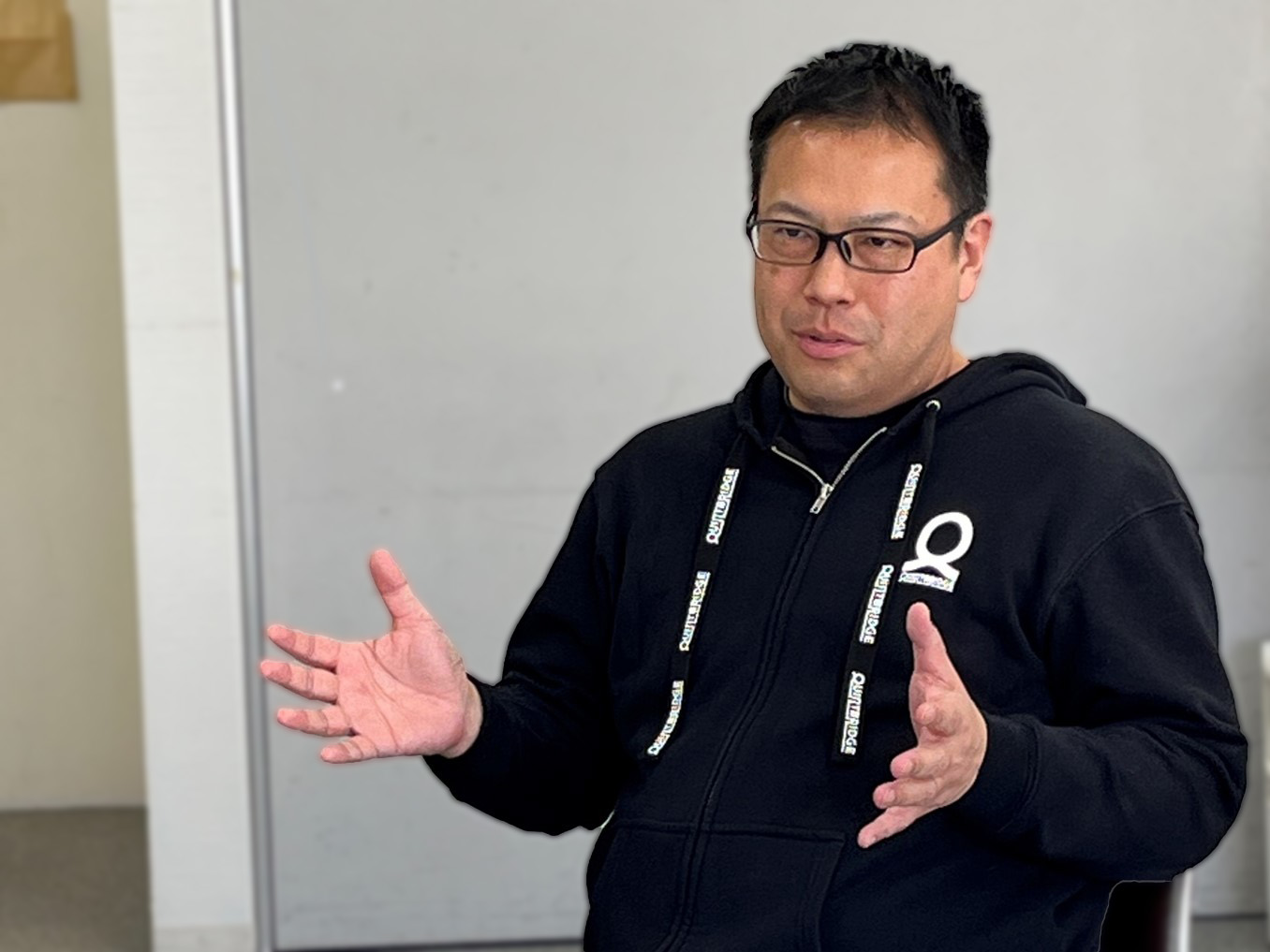
Shimokawa: It would be interesting if participants could receive a bag of rice if Kinmemai rice sold well. I am sure that if a Health Lab project is successful, there will be some kind of return for the citizens, but it would be better if there was a more direct incentive for participants in the tester survey. Instead of just asking them to take the survey, you could say, "If you take the survey and it increases sales, you will also receive this incentive!" That would make it more like a game, and more people would want to participate.
Liu:If a project is successful, there is a reward. There is another way, which is to give points to all participants. It might be fun if you could choose.
Taking advantage of open innovation
Working with QUINTBRIDGE and i2.JP
to give shape to "what we want"
Seeds of innovation for everyone
Sugiyama:It was also meaningful for us to be able to interact with people from various local governments at the 2024 event. The case of the Osaka office of Okinawa Prefecture was particularly fascinating, and we have been in contact with them ever since.
Akasaka: The Osaka Office of Okinawa Prefecture spoke at the matching event in 2023, and in August 2024, in collaboration with i2.JP and QUINTBRIDGE, held an Okinawa Prefecture version of the workshop "Taking on Okinawa's Unique Healthcare Challenges," which included a three-hour in-depth discussion of five challenges. To follow up, another workshop was held in Okinawa in September. To get a more realistic picture of the challenges, we invited insurers, local companies promoting health management, and scaled startups. QUINTBRIDGE members were really motivated as they traveled from Kansai, and some of them even arrived in Okinawa the day before the workshop to do street interviews. I think that creating a series like this and digging deeper is one way to realize a workshop with a high level of enthusiasm.
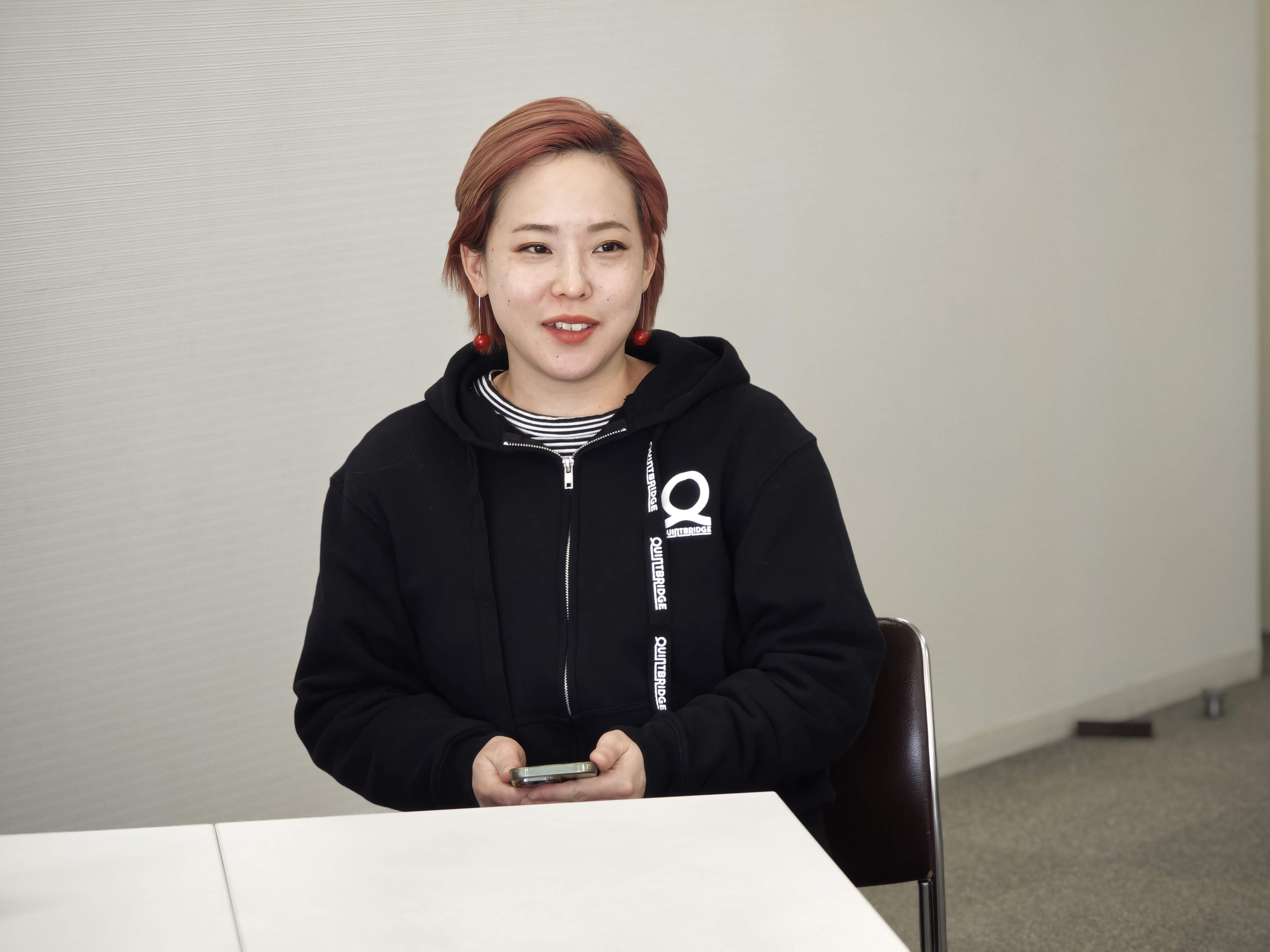
Shimokawa:We can think of lots of events that could be organized by Matsumoto Health Lab. It would be good to delve deeper into existing issues, but I think it would also be interesting to set more abstract themes and explore issues with a variety of players without being constrained by existing roles and issues. For example, you could invite neighboring municipalities and hold a workshop at QUINTBRIDGE to think about “healthcare issues in Nagano Prefecture”. And when you identify new challenges, you think about what you can do using the resources of Matsumoto Health Lab. In this way, you may be able to find expanded new functions beyond what you thought you could do before.
Akasaka:Sometimes the problem you see is not the problem other people see. When you look at the big picture from an objective perspective, you will find problems you have never thought of before, and when you think about what you can do with your own resources, you can elaborate on your idea and see the seeds of new co-creation.
Liu:That's exactly why we're holding events with QUINTBRIDGE x i2.JP. By bringing together QUINTBRIDGE, which has a variety of members, and i2.JP, which specializes in healthcare, a chemical reaction will occur, and unexpected challenges and ideas will emerge. I am sure that Matsumoto Health Lab x QUINTBRIDGE x i2.JP can do something interesting as well. It will also be an opportunity for companies to realize that their resources can be used to help solve local issues.
Sugiyama:I thought that in order to find a co-creation partner, we needed to clarify and present the issues more clearly. But after hearing what you just said, we could think more broadly...
Akasaka: Just come and visit us! It's OK to say “We are having trouble with this” or “We'd like to try this”. If you ask us for advice, we'll do our best to help you, and there's always something we can do.
Liu:Rather than being 100% prepared, the open innovation approach is to take a step forward by taking a risk together and making corrections along the way. "We want to try something like this" becomes the seed of innovation for all of us, for other players. I think there are many partner companies that want to know about local needs and issues, so please contact us if there is something you would like to try!
Chiyoda:I would love to see an event that involves neighboring cities, as it would be a good opportunity for municipalities to collaborate with each other.
Today's talk has made me realize that “governments x open innovation” can do many things together. We have only participated in events, but from now on, we would like to take on the challenge of creating a place for co-creation together.
※The information in this article is as of April 2025. Please note that the information may differ from the current situation.
For inquiries
Interested in joining us?
Thank you for your interest. We will get in touch soon.